
Table of Contents
- How Remedial Massage Therapy Eases Pain and Discomfort
- Remedial Massage for Muscle Tension and Tightness
- Supporting Circulation, Recovery and Tissue Repair
- Flexibility, Mobility and Posture: What Changes Over Time
- What to Expect From Remedial Massage
- How Often to Get Remedial Massage
- Remedial Massage vs Relaxation Massage: Key Differences
- When to Seek Advice Before Booking a Remedial Massage
- Frequently Asked Questions
Last Updated: October 13, 2026
How Remedial Massage Therapy Eases Pain and Discomfort
Remedial massage therapy is a targeted form of soft tissue treatment that assesses and works on specific areas of pain, tension and restricted movement rather than providing general relaxation. At Acupuncture, we combine over 40 years of clinical experience with personalised treatment plans, so each session addresses your particular pattern of discomfort instead of following a fixed routine.
Many people assume massage is a luxury rather than a health treatment. That assumption misses what remedial work actually does: it treats the soft tissue causing the problem, not just the symptom sitting on top of it.
The benefits of remedial massage therapy extend well beyond a pleasant hour on the table. Here is what the treatment can realistically help with, and what to expect if you book one.
Remedial massage is a targeted, assessment-led treatment for pain, tension and movement problems. It is not a relaxation service with a firmer grip.
Remedial Massage for Muscle Tension and Tightness
Remedial massage for muscle tension focuses on the specific bands of tight tissue that restrict movement and cause referred discomfort. Therapists use slower, deeper pressure on these areas rather than broad, light strokes.
Muscle tightness often develops gradually. Desk workers who hold their shoulders in one position for hours, or people living a largely sedentary lifestyle, commonly develop tension through the neck, upper back and shoulders. Over time, that tightness can pull on surrounding structures and change how you move.
A common mistake is waiting until the tension becomes pain before seeking treatment. Addressing tightness early usually means fewer sessions and less discomfort overall.
Techniques used in a remedial session can include trigger point release, where sustained pressure is applied to a specific knot in the muscle until it softens, along with broader work across the surrounding soft tissue.
Supporting Circulation, Recovery and Tissue Repair
Improved blood circulation is one of the more direct effects of remedial massage, and it is also one of the most overstated online. Here is what the treatment can realistically do, and where the evidence is thinner than benefit lists suggest.
The mechanism. The mechanical pressure of treatment compresses and releases soft tissue, which temporarily increases local blood flow through the area being worked on. That supports the delivery of oxygen and nutrients to muscle tissue and helps clear metabolic by-products that build up after exertion. The effect is real, but it is largely local and short-lived, it is not a whole-body circulatory overhaul.
What that means for recovery. When you have strained or overworked tissue, the body repairs it through rest, healthy circulation and progressive loading. Remedial massage can support that process by reducing stiffness and making movement more comfortable in the days after treatment, which in turn makes it easier to stay active. It works alongside, not instead of, proper medical care for a diagnosed injury.
The lymphatic angle. Gentle, directional strokes can assist lymphatic drainage by encouraging fluid movement through the superficial tissues. This is why some people notice reduced puffiness or heaviness after a session. It is a supportive effect, not a treatment for lymphoedema or any diagnosed lymphatic condition, which needs management by an appropriate healthcare professional.
Remedial massage can improve local circulation and reduce stiffness in the short term. It supports recovery, it does not replace rest, rehabilitation or medical care.
Realistic expectations. Most practitioners find that circulation and recovery benefits are cumulative rather than instant. A single session may leave you feeling looser for a day or two. Meaningful change to how tissue recovers usually comes from consistent treatment paired with load management, sleep and hydration on your side.
If you are recovering from a specific injury, tell your therapist. A treatment plan built around your stage of recovery, early protection, mid-stage mobility, late-stage loading, will always be more useful than a generic full-body session.
Better Health Channel, muscle strain and sprain recovery guidance
Flexibility, Mobility and Posture: What Changes Over Time
Improved range of motion is one of the more noticeable benefits of remedial massage therapy, and it tends to build gradually across a course of treatment rather than appearing after a single session.
When muscle tightness eases, joints can move through a fuller range. That shows up as easier reaching, bending or turning. For people with postural problems from long hours at a desk, this change can also support better spinal alignment over time.
Realistic expectations matter here. One session may leave you feeling looser for a few days. Lasting changes to flexibility and posture usually require consistent treatment plus some work on your side: moving more during the day, adjusting your workstation, and following any stretches your therapist suggests.
The people who get the most out of remedial treatment are the ones who pair it with small daily changes. Ten minutes of movement between meetings does more for your posture than an extra massage alone.
::: (Source: the body repairs it through rest, healthy circulation and progressive loading)
What to Expect From Remedial Massage
A first remedial massage appointment usually begins with a conversation about your pain, medical history and goals, followed by an assessment and treatment, and finishes with aftercare advice. The therapist will explain what they find and what they plan to do.
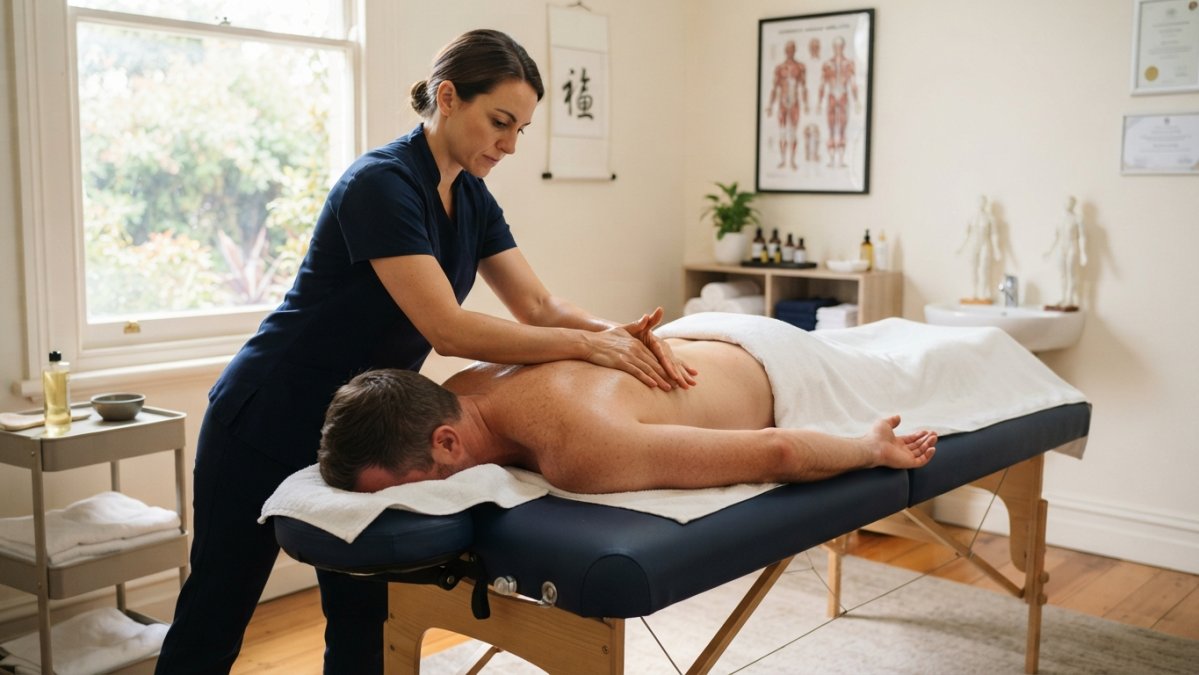
You stay clothed or partially draped throughout, and you can speak up at any point about pressure. A good therapist checks in and adjusts. Discomfort during treatment should feel like productive pressure, not sharp pain.
Afterwards, some people feel looser and lighter. Others feel mild soreness for a day or two, similar to after exercise. Drinking water and gentle movement usually help.
At Acupuncture, we take an unhurried approach to assessment, so your first appointment includes time to understand the root of the problem rather than rushing straight into treatment.
How Often to Get Remedial Massage
How often to get remedial massage depends on your situation: acute problems often need more frequent sessions close together, while ongoing maintenance is typically spaced further apart. Your therapist should recommend a schedule based on your assessment, not a fixed package.
As a general guide, many people start with weekly or fortnightly sessions for a few weeks, then reduce frequency as symptoms settle. There is no single correct number. Progress is measured by how you feel and move, not by how many appointments you have booked.
Be wary of any provider who locks you into a long plan before assessing you. A good treatment plan is reviewed and adjusted as you improve.
Remedial Massage vs Relaxation Massage: Key Differences
Remedial massage vs relaxation massage comes down to purpose and technique. Relaxation massage uses flowing, light-to-medium pressure across the whole body to calm the nervous system. Remedial massage uses targeted treatment techniques on specific problem areas to address pain and dysfunction.
| Feature | Remedial Massage | Relaxation Massage |
|---|---|---|
| Main goal | Treat pain and restricted movement | Calm the body and mind |
| Pressure | Deeper, targeted | Light to medium, flowing |
| Focus | Specific problem areas | Whole body |
| Assessment | Yes, before treatment | Rarely |
| Best for | Tension, stiffness, injury recovery | Stress reduction, general relaxation |
Both have value. If your goal is stress reduction, a relaxation massage may suit you perfectly. If you have ongoing muscle tension, stiffness or a movement problem, remedial work is the more appropriate choice.
When to Seek Advice Before Booking a Remedial Massage
Remedial massage is generally well tolerated, but it is not suitable for everyone in every situation. Knowing when to check with a doctor first is part of getting good care, not a reason to avoid treatment.
Speak to a doctor or qualified health professional before booking if you:
- Are pregnant, some techniques and positions need modifying, particularly in the first trimester and later stages. A therapist trained in pregnancy massage can adapt, but medical clearance is sensible if you have any pregnancy-related complications.
- Are recovering from surgery, timing matters. Working on tissue too soon after an operation can interfere with healing. Your surgeon’s guidance on when to resume manual therapy takes priority.
- Take blood-thinning medication, including warfarin, direct oral anticoagulants and some antiplatelet medicines. Deeper pressure carries a higher risk of bruising and, rarely, more serious bleeding.
- Have a diagnosed condition affecting skin, circulation or bones, for example varicose veins, easy bruising, osteoporosis, or a history of blood clots. Techniques may need to be avoided or modified.
- Have cancer or are undergoing cancer treatment, massage can often be safely adapted, but it should be discussed with your treating team first, particularly around lymph nodes and any areas of active treatment.
- Have an acute injury, suspected fracture, or significant swelling, massage is not appropriate until the injury has been assessed.
Red flags that need medical assessment, not massage:
- Unexplained pain that is getting worse rather than settling
- Numbness, tingling, weakness or loss of sensation in a limb
- Severe or sudden-onset pain, especially after trauma
- Unexplained swelling, redness or heat in a limb
- Pain accompanied by fever, unexplained weight loss, or night pain that wakes you
These symptoms can point to conditions that need proper diagnosis. Massage can support recovery once you know what you are dealing with, it is not a substitute for medical assessment.
If you are unsure whether massage is appropriate for your situation, ask your GP or treating specialist first. A qualified therapist will also screen you at your first appointment and adjust or decline treatment if needed.
At your appointment. Tell your therapist about any medical conditions, medications, recent injuries or surgeries, even if they seem unrelated. This is not a formality. Some techniques need to be modified or avoided depending on your health, and a qualified therapist will adjust the treatment plan accordingly. If a therapist does not ask about your health history before starting, that is a reason to pause.
Frequently Asked Questions
How often should I get a remedial massage?
It depends on your goals and how your body responds. For a recent injury or long-standing muscle tension, many therapists suggest weekly sessions for the first few weeks, then spacing them out as symptoms settle. For general maintenance, once every four to six weeks is common. Your therapist will review progress and adjust the plan, so ask for a clear recommendation at your first appointment rather than guessing.
What is the difference between remedial massage and a relaxation massage?
Relaxation massage uses gentle, flowing strokes to help you unwind, with no specific clinical goal. Remedial massage is a targeted treatment that assesses posture, movement and specific areas of muscle tightness, then uses techniques such as deep tissue work, trigger point release and stretching. The pressure and focus are tailored to a treatment plan, so it often feels firmer and more structured than a spa-style massage.
Can remedial massage help with muscle tension from desk work?
Yes, it is commonly used for neck, shoulder and lower back tension linked to long hours sitting. Treatment focuses on the muscles that become tight and overworked, and may include advice on posture and movement breaks between sessions. Results build over time, so combining massage with small daily changes at your desk usually works better than massage alone.
How long do the effects of a remedial massage last?
Many people notice relief for several days to a couple of weeks, depending on the cause of the tension, your activity level and how often you book. Effects tend to last longer when treatment is part of an ongoing plan that includes movement, stretching and posture habits. If pain returns quickly or worsens, it is worth discussing with your therapist or GP.


