
Last Updated: October 23, 2026
Quick Summary
Holistic pain management in South Yarra is a whole-person approach to reducing pain that looks at lifestyle, movement, stress, and body mechanics together, rather than treating one sore spot in isolation. It combines options such as acupuncture, remedial massage, herbal medicine, and daily self-care habits into a plan you can sustain.
- A sore shoulder rarely begins at the shoulder; it often traces back to posture, stress, sleep, or an old injury.
- A chronic pain management plan usually starts with one or two hands-on sessions a fortnight.
- Set a timer to stand and move every 45 minutes to support treatment between appointments.
- Ask whether a practitioner is registered with AHPRA, where registration applies to your profession.
- No complementary approach should replace medical care for a diagnosed condition.
Table of Contents
- Why Holistic Pain Management in South Yarra Looks Beyond the Symptom
- Acupuncture for Pain Management: What the Evidence and Experience Show
- Remedial Massage for Pain: Releasing Tension Before It Becomes Chronic
- Building a Chronic Pain Management Plan That Fits Your Life
- Pain Management Self-Care You Can Start This Week
- Herbal Medicine and Other Complementary Approaches to Consider
- How to Choose a Holistic Pain Management Practitioner in South Yarra
- Frequently Asked Questions
Why Holistic Pain Management in South Yarra Looks Beyond the Symptom
Holistic pain management in South Yarra starts with a simple idea: pain is a signal, not the problem itself. At Acupuncture, we treat the signal as useful information about what else is going on in the body. (Source: a systematic review and meta-analysis published by the National Institutes of Health)
That approach matters for desk-bound office workers with a stiff neck, runners nursing an old injury, and anyone living with long-term discomfort. A sore shoulder rarely begins at the shoulder. It often traces back to posture, stress, sleep, or an old injury that never settled.
Holistic pain management is a whole-person approach to reducing pain that looks at lifestyle, movement, stress, and body mechanics together, rather than treating one sore spot in isolation.
Below, we break down seven natural options, what each one involves, and how to tell whether a practitioner is right for you.
Acupuncture for Pain Management: What the Evidence and Experience Show
Acupuncture for pain management involves inserting fine, sterile needles at specific points to influence how the body perceives and responds to pain. Many people find it helps them move more comfortably and feel less guarded in the treated area.
The evidence is mixed but worth taking seriously. Some reviews find benefit for certain pain types, while others call for more research. We tell patients this plainly. What we can say is that careful assessment matters more than any single technique.
What a Session Involves and Why Needling Doesn’t Have to Hurt
A first visit usually includes a detailed history, a look at how you move, and a treatment plan. Needles are typically finer than a blood test needle. Most people feel a brief pinch, then nothing much at all.
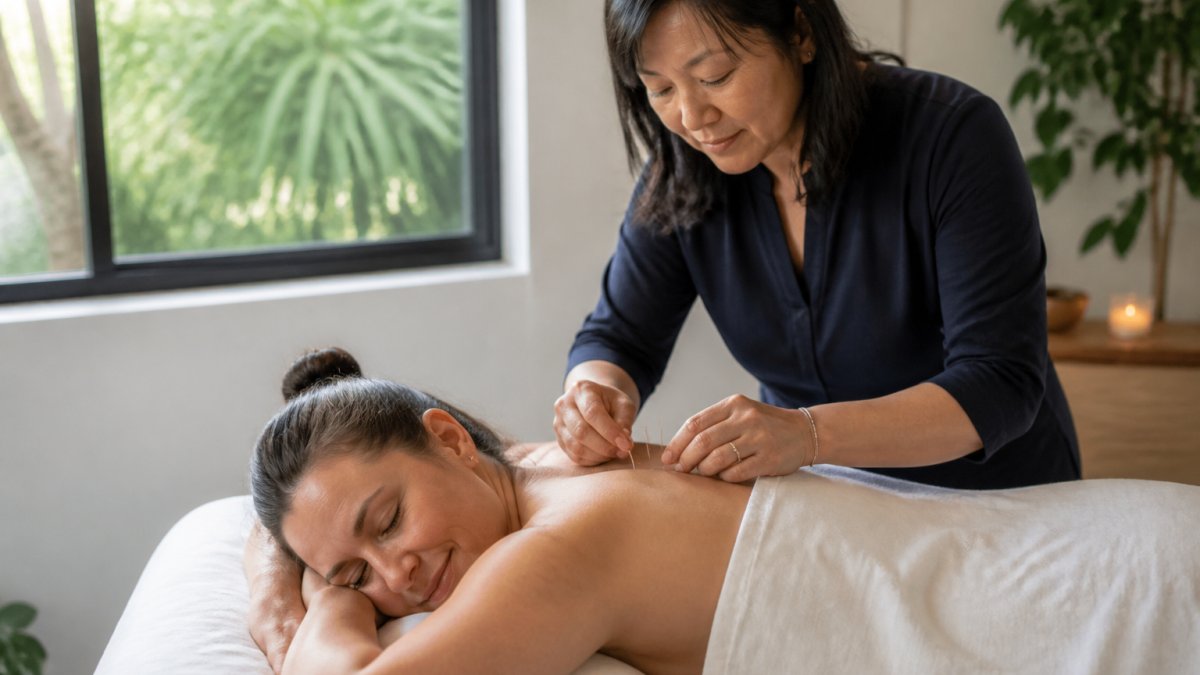
If past needling felt sharp, say so at booking. Placement, depth, and needle gauge can all be adjusted. A practitioner who listens will change their approach rather than push through.
Remedial Massage for Pain: Releasing Tension Before It Becomes Chronic
Remedial massage for pain targets tight muscles, restricted joints, and the soft tissue patterns that build up over months at a desk or in training. It works well alongside needling, not instead of it.
The goal is not a pleasant hour. It is to restore range of motion and reduce the guarding that makes pain linger.
- Desk workers: focus on neck, shoulders, and upper back
- Runners and gym-goers: calves, hips, and glutes
- Stress-related tension: jaw, shoulders, and mid-back
A common mistake is waiting until pain is severe. Earlier treatment tends to be simpler.
Building a Chronic Pain Management Plan That Fits Your Life
A chronic pain management plan is a written, realistic schedule of treatments, movement, sleep, and stress habits you follow over months, not days. The best plan is the one you can actually keep.
We build plans around what patients can sustain. That usually means:
- One or two hands-on sessions a fortnight to start
- A short daily movement routine, ten minutes at most
- A sleep and stress habit to review at each visit
- A clear review point to judge progress honestly
The most common mistake is chasing a quick fix and quitting after two sessions. Pain that has built up over years rarely resolves in a fortnight, and stopping early tells you nothing about whether the approach works for you.
Pain Management Self-Care You Can Start This Week
Pain management self-care covers the daily habits that support hands-on treatment between appointments. None of it is dramatic, but consistency does the heavy lifting.
- Set a timer to stand and move every 45 minutes
- Try five slow neck and shoulder rolls each morning
- Keep a simple pain diary: what you did, how you felt
- Swap one evening of screen time for a short walk
- Check your desk setup: screen at eye level, feet flat
These habits will not replace treatment. They make treatment work harder.
Herbal Medicine and Other Complementary Approaches to Consider
Herbal medicine is a traditional approach that uses plant-based formulas, prescribed after a proper assessment. It suits some people and not others, and it can interact with prescription medicines, so always tell your practitioner what you take.
Other options people ask us about include:
- Cupping: suction cups used to ease muscle tension
- Guasha: controlled scraping to work on soft tissue
- Mind-body practices: breathing, meditation, gentle yoga
No complementary approach should replace medical care for a diagnosed condition. Use these as support alongside your doctor’s advice, and be honest with every practitioner about what else you are taking or doing.
How to Choose a Holistic Pain Management Practitioner in South Yarra
Choosing a practitioner comes down to qualifications, assessment quality, and whether they explain their reasoning. Ask these questions before you book:
- Are you registered with AHPRA, where registration applies to your profession?
- What does a first consultation involve, and how long is it?
- How will you measure whether treatment is working?
- Do you coordinate with my GP or specialist?
- What are the risks, and what should I expect afterwards?
A good practitioner welcomes these questions. One who dodges them is telling you something useful. For more on what to expect, see the Australian Health Practitioner Regulation Agency and the National Health and Medical Research Council on evidence-based care.
At Acupuncture, our team brings over 40 years of clinical experience and uses precise, low-pain needling alongside herbal medicine and remedial massage. We build personalised plans with no rushed sessions.
Frequently Asked Questions
What does holistic pain management involve?
Holistic pain management looks at the whole person rather than just the sore spot. It can combine hands-on therapies such as acupuncture and remedial massage with herbal medicine, movement, stress support and lifestyle changes. The aim is to address contributing factors like posture, sleep, stress and circulation, not only the pain itself. A practitioner will usually take a detailed history and build a plan around your specific situation, then review how you respond over time.
Can acupuncture be part of a chronic pain management plan?
Yes. Acupuncture for pain management is often used alongside other therapies and conventional medical care. A chronic pain management plan might include regular acupuncture sessions, remedial massage, gentle movement and self-care at home. Research interest in acupuncture for conditions such as lower back pain and neck pain continues, though results vary between individuals. Speak with your GP about how complementary therapies fit with your existing treatment, and tell your practitioner about any medications or health conditions.
How do I start a chronic pain management plan?
Start with a proper assessment. Book a consultation with a qualified practitioner who can review your history, examine how you move and identify likely contributors to your pain. From there, set realistic goals, such as sleeping better or sitting through a workday with less discomfort, and build a plan that combines in-clinic treatment with pain management self-care. Track your symptoms in a simple diary so you and your practitioner can see what is actually helping over weeks, not days.
What should I ask a practitioner before trying a complementary therapy?
Ask about their qualifications and registration, how many years they have practised, and what a typical session involves. It is reasonable to ask how they would approach your specific concern, how many sessions they expect before reviewing progress, and whether they work alongside your GP or specialist. Also ask about hygiene standards, any risks or side effects, and what happens if the treatment is not helping. A good practitioner welcomes these questions and gives clear, unhurried answers.
Pain that has hung around for months rarely shifts on its own, and piecing together the right mix of treatment and daily habits is hard to do alone. At Acupuncture, we offer tailored acupuncture, herbal medicine, and remedial massage, backed by decades of clinical experience and a PICS GMP-certified herbal dispensary. Book a consultation and get a plan built around your body, not a template.


