
Table of Contents
- Understanding Chronic Sciatica and Why It Persists
- Red Flags: When to Seek Urgent Medical Advice
- Acupuncture for Sciatica: What the Evidence Shows
- Exercises for Sciatica Pain: A Graded Approach
- Sciatica Self-Care Tips for Daily Management
- Treatment Options for Recurring Sciatica
- Conclusion: Setting Realistic Expectations for Long-Term Relief
- Frequently Asked Questions
Last Updated: October 5, 2026
Understanding Chronic Sciatica and Why It Persists
Chronic sciatica is pain that travels along the sciatic nerve, lasting longer than three months rather than settling within the usual six-week window. At Acupuncture, we see this pattern often: an initial injury heals, yet the nerve keeps firing because the underlying drivers were never addressed. That is the central problem with holistic treatment for chronic sciatica pain. It is not about chasing the symptom.
How Sciatic Nerve Pain Differs from Acute Back Pain
Acute back pain usually follows a clear trigger, such as lifting something awkwardly, and eases as tissue heals. Sciatic nerve pain behaves differently.
Chronic sciatica is defined by duration, not severity. If pain along the sciatic nerve has persisted beyond three months, the goal shifts from rest and recovery to identifying and managing the drivers that keep it active.
Red Flags: When to Seek Urgent Medical Advice
Most sciatica is not an emergency, but a small proportion of cases involve the spinal cord or the cauda equina, the bundle of nerves below the spinal cord, and those need same-day assessment. The practical skill is separating “get this looked at soon” from “call an ambulance or go straight to an emergency department”.
Emergency: seek care immediately
Go to an emergency department or call emergency services if you develop any of the following, especially if they appear together or worsen over hours:
- Saddle numbness, reduced or altered sensation around the groin, inner thighs, genitals or the area that would touch a saddle.
- Bladder or bowel changes, difficulty starting urination, retention, incontinence, or loss of bowel control you cannot explain.
- Progressive weakness, the leg is getting weaker rather than sore, or you are tripping, dragging the foot, or struggling to rise from a chair.
These features can indicate compression of the cauda equina or a spinal cord problem. They are time-critical: outcomes are better when decompression happens early, so do not wait to see whether it settles overnight and do not book a routine appointment first.
Prompt review: see a clinician within days
Book a timely appointment with your general practitioner or an appropriate clinician if you have:
- A history of cancer, unexplained weight loss, night sweats or fever alongside back or leg pain.
- Pain that is severe, unrelenting and worse at night or at rest rather than with movement.
- Symptoms that began after a fall in someone with osteoporosis, or in someone taking long-term corticosteroids.
Why this matters for holistic care
Hands-on therapies, needling and exercise are not appropriate as a first step when red flags are present. A responsible practitioner screens for these before treatment and refers on when they appear. If you have been cleared and your symptoms are stable, holistic care can sit alongside medical management, but the screening step is not optional, and any practitioner who skips it is skipping the most important part of the assessment.
Saddle numbness, new bladder or bowel changes, or rapidly worsening leg weakness are not “wait and see” symptoms. Seek emergency assessment the same day.
Red flags are rare but they change the entire plan. Emergency features need same-day hospital assessment; constitutional or progressive features need prompt medical review before any hands-on treatment begins.
Acupuncture for Sciatica: What the Evidence Shows
Acupuncture for sciatica is best understood as a supportive treatment that some people find helpful for pain and muscle tension, not as a stand-alone cure. The honest position is that evidence quality varies by study, results differ between individuals, and it works best as one component of a broader plan that includes movement, load management and medical care where needed.
What the research can and cannot tell us
Reviews of acupuncture for chronic low back pain and sciatica generally report small to moderate short-term improvements in pain and function compared with no treatment or usual care, but the effect sizes are modest and the studies are often limited by small samples, difficulty blinding participants, and variation in how needling is performed. That means we can reasonably say some people experience meaningful relief, but we cannot promise a specific outcome, and anyone who does is overstating what the evidence supports.
What a realistic course looks like
Most practitioners would suggest a short trial rather than an open-ended commitment. A reasonable approach is:
- Assessment first, a proper history and physical screen, including red-flag screening, before any needling.
- A defined trial, often around four to six sessions over several weeks, with a review point to decide whether it is helping.
- Measurable goals, not “less pain” in the abstract, but things like sitting tolerance, sleep quality, or how far you can walk before symptoms start.
If there is no meaningful change by the review point, continuing indefinitely is usually not the best use of time or money. If there is a clear response, sessions can be spaced out and used as part of an ongoing self-management plan rather than as a permanent dependency.
What a session involves and how it feels
A typical session starts with a detailed history and physical assessment, not a standard template. Fine needles are placed at selected points and left for a period while you rest. Most people feel a mild sensation rather than sharp pain. Sessions are unhurried, because a rushed assessment leads to a generic treatment. Expect to discuss your symptoms, your work setup, and your goals before any needling begins.
Safety, precautions and who should check first
Needling is generally well tolerated, but it is not risk-free and it is not right for everyone. Minor bleeding or bruising at needle sites is common. More serious complications are rare but include infection and, very rarely, injury to deeper structures. Extra caution or a medical conversation first is warranted if you:
- Take blood-thinning medication or have a bleeding disorder.
- Have a compromised immune system, or a implanted device such as a pacemaker (some electroacupuncture techniques are avoided).
- Are pregnant, some points are avoided or need modification.
Always tell your practitioner about your medications, medical conditions and any implanted devices. If you are unsure whether needling is appropriate for you, ask your general practitioner first.
Judge acupuncture by function, not just by pain scores. If you can sit through a meeting, sleep through the night, or walk further before symptoms start, that is a meaningful response even if the pain number has not changed much.
Acupuncture may help some people with chronic sciatica as part of a broader plan, but the evidence supports modest short-term benefit rather than a cure. A defined trial with clear functional goals is more useful than an open-ended course, and safety screening comes first.
Exercises for Sciatica Pain: A Graded Approach
Exercises for sciatica pain should start gently and progress only as symptoms allow. A graded approach means beginning with movements that calm the nerve, then adding load and range as tolerance improves. Pushing into sharp pain usually sets recovery back. A reasonable starting sequence looks like this:
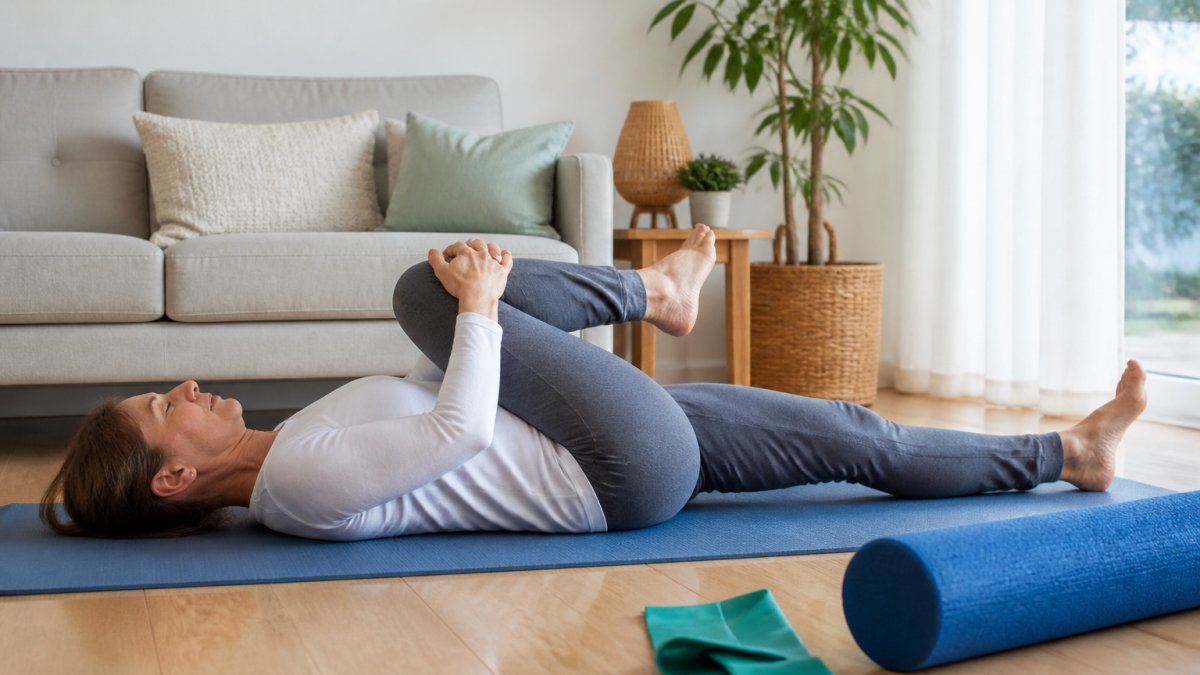
- Lie on your back and bring one knee toward your chest, holding for 20 to 30 seconds.
- Perform a gentle pelvic tilt, flattening the lower back against the floor, for 10 slow repetitions.
- Try a seated nerve glide, extending the leg slowly without forcing the stretch.
- Add a figure-four stretch for the glutes once the first three feel comfortable.
- Progress to walking and light core work only when leg pain is settling, not worsening.
Stop any movement that increases radiating pain down the leg. A physiotherapist or qualified practitioner can tailor the sequence to your presentation.
Sciatica Self-Care Tips for Daily Management
Sciatica self-care tips work best when they fit into an ordinary day rather than a rehabilitation timetable. Heat therapy before activity can relax tight muscles, while cold therapy after activity may help calm inflammation. Break up long periods of sitting every 30 to 45 minutes, since prolonged desk posture is a common aggravating factor for office workers. Sleep with a pillow between the knees to keep the spine neutral.
A common mistake is stretching aggressively into the pain. Nerve tissue responds badly to being forced. If a stretch makes the leg pain travel further down or feel sharper, back off and reduce the range rather than pushing through it.
Treatment Options for Recurring Sciatica
Treatment options for recurring sciatica rarely come down to a single intervention. Most people do best with a combination: manual therapy such as remedial massage to release tight muscles, acupuncture to help with pain and nerve irritation, targeted exercise to build tolerance, and posture correction to reduce the load on the lower back. Some people also find acupuncture or dry needling helpful for muscle release.
Building a Personalised Care Pathway
A personalised care pathway starts with understanding your specific drivers, not applying a generic protocol. Two people with the same diagnosis can need very different plans: one may be dominated by muscle tension, another by disc-related nerve compression, another by poor movement habits built over years at a desk. Assessment should identify which factors matter most for you, and the plan should be reviewed as you progress.
Conclusion: Setting Realistic Expectations for Long-Term Relief
Chronic sciatica is manageable, but it rarely resolves overnight, and anyone selling a quick fix is not being straight with you. Realistic expectations mean steady improvement over weeks, with setbacks along the way, and a plan that addresses the underlying cause rather than masking the symptom. At Acupuncture, we combine traditional Chinese medicine with modern clinical understanding, personalised treatment plans, and a PICS GMP-certified herbal dispensary to support that process.
Frequently Asked Questions
What is the best holistic treatment for chronic sciatica?
There is no single best approach. A holistic treatment for chronic sciatica pain typically combines several methods: acupuncture for pain modulation, targeted exercises to improve mobility, soft-tissue therapy such as massage, and daily self-care habits like heat or cold therapy. Because chronic sciatica has multiple contributing factors, including nerve compression, muscle tension, and posture, a personalised plan that addresses your specific presentation tends to work better than any one therapy alone. A qualified practitioner can assess which combination suits you.
Can acupuncture be part of a chronic sciatica management plan?
Yes. Acupuncture for sciatica is often used as part of a broader management plan. Some studies suggest acupuncture may help reduce pain intensity and improve function in people with chronic low back and leg pain, though evidence quality varies and results differ between individuals. It is generally considered safe when performed by a registered practitioner using sterile, single-use needles. Acupuncture is not a replacement for medical assessment, especially if you have progressive weakness or loss of bladder or bowel control.
When should I seek medical advice for sciatica symptoms?
Seek urgent medical advice if you experience severe or worsening weakness in your leg or foot, numbness in the saddle area, loss of bladder or bowel control, or pain following a significant trauma. These can indicate cauda equina syndrome, a rare but serious condition requiring immediate hospital assessment. For persistent pain lasting more than a few weeks, or pain that limits your daily activities, see a GP or physiotherapist for a proper diagnosis before starting any self-care routine.
Can gentle exercise help with recurring sciatica?
Gentle, graded exercise is one of the most supported approaches for recurring sciatica. Exercises for sciatica pain typically focus on restoring mobility, reducing nerve irritation, and strengthening supporting muscles. Examples include pelvic tilts, cat-cow stretches, and gentle nerve glides. Start slowly and stop if pain worsens or radiates further down the leg. A physiotherapist can design a program matched to your stage of recovery, which is safer than following generic routines during a flare-up.
What are the treatment options for recurring sciatica?
Treatment options for recurring sciatica range from conservative care to medical intervention. Conservative options include physiotherapy, acupuncture, massage, targeted exercises, posture correction, and pain-relief medication. If symptoms persist despite these, a doctor may discuss corticosteroid injections or, in rare cases, surgical referral. Most people improve with non-surgical care. The key is identifying what triggers your flare-ups, whether that is prolonged sitting, poor lifting technique, or muscle tightness, and addressing that underlying cause.
Is sciatica considered a chronic disease?
Sciatica itself is a symptom, not a disease. It describes pain radiating along the sciatic nerve, usually from the lower back into the leg. It becomes chronic when symptoms persist for 12 weeks or longer. Chronic sciatica can be managed, but it often requires ongoing attention to posture, movement habits, and strength. Some people experience recurrent episodes rather than constant pain. A healthcare professional can help you understand your pattern and build a plan to reduce flare-ups.
If recurring sciatic pain has started shaping your days, the sensible next step is a proper assessment rather than another round of guesswork. Acupuncture offers personalised treatment plans with no rushed sessions, precise low-pain needling, and an integrative approach that blends traditional Chinese medicine with modern clinical understanding. Book Now and get a clear plan built around your symptoms, not a template.


