
Last Updated: October 28, 2026
Quick Summary
To find a reputable acupuncturist, start by checking the AHPRA national register to confirm the practitioner is registered to practise. Then ask about their qualifications, treatment approach, hygiene practices and how they obtain informed consent before booking.
- Search the AHPRA register by the practitioner’s name to verify registration details.
- Ask what their registration number is and how they approach your specific concern.
- A good clinic uses single-use sterile needles opened in front of you and a sharps container.
- Ask how many sessions they expect and what the known risks and side effects are.
- Read reviews for patterns rather than single complaints before booking.
Table of Contents
- Start With Registration: Finding a Registered Acupuncturist
- The Questions to Ask an Acupuncturist Before You Book
- Acupuncture Safety and Hygiene: What a Good Clinic Looks Like
- What to Expect at an Acupuncture Appointment
- Comparing Fees, Rebates and Value
- How to Find a Reputable Acupuncturist Near You
- Booking Your First Appointment
- Frequently Asked Questions
Start With Registration: Finding a Registered Acupuncturist
Start by checking the national register. In Australia, acupuncturists are regulated through the Australian Health Practitioner Regulation Agency (AHPRA). The register can help you check whether someone is registered to practise.
Check registration as one part of your decision.
Below are questions to consider before booking.
How to Verify Registration and Credentials
You can search the AHPRA register by the practitioner’s name and check the registration details shown.
If the search returns nothing, ask the practitioner for clarification.
For a fuller walkthrough of the selection process, see our guide on how to choose an acupuncturist.
What Qualifications to Look For
Experience matters, but it should sit on top of formal training, not replace it. Someone who has treated pain for twenty years after a proper degree is a different proposition from someone who learned from a short course.
The Questions to Ask an Acupuncturist Before You Book
Here are questions you could ask before booking.
“What is your registration number?”
“How do you approach my specific concern?” Ask how they would discuss a treatment plan and review progress.
“What are the risks, and what should I watch for after treatment?” Ask the practitioner to explain potential risks and what to watch for after treatment.
“Can I keep seeing my GP or specialist while I have treatment?” Discuss this with your practitioner and medical team.
“How will you get my informed consent?”
You may wish to write these down before you call.
Acupuncture Safety and Hygiene: What a Good Clinic Looks Like
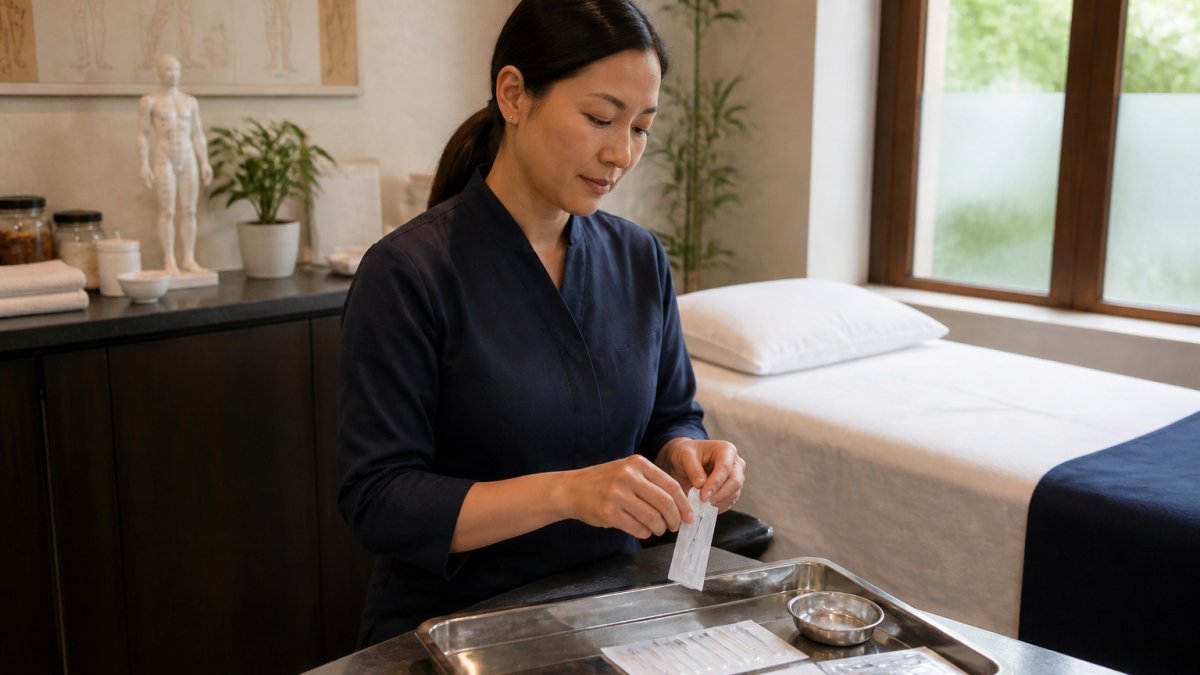
Acupuncture safety comes down to a handful of visible details. A well-run clinic uses single-use sterile needles, opens them in front of you, and disposes of them in a sharps container. You should see clean linen, a hand-washing sink, and a treatment room that looks like a clinical space rather than a spare bedroom.
Ask directly about needle disposal and cleaning between patients. Registered practitioners follow infection-control guidelines set by the National Health and Medical Research Council, and they should be able to explain their process in plain language. Maintaining this level of scrutiny regarding safety protocols remains a vital part of finding a reputable practitioner, a standard of diligence that applies equally when evaluating the clinical environment of a chiropractor.
Hygiene and Infection-Control Questions to Ask
You can ask these questions to understand the practitioner’s approach.
- Are the needles sterile and single-use? The answer should be yes, and the needle should be opened from its sealed packet in front of you.
- How do you dispose of used needles? Look for a dedicated sharps container in the treatment room, not a general waste bin.
- What cleaning happens between patients? You want to hear about fresh linen, wiped surfaces, and hand hygiene before and after each treatment.
- Do you wash your hands before and after needling? Hand hygiene is the simplest and most important infection-control step.
- What happens if a needle site bleeds or bruises? A clear aftercare instruction, pressure, a clean dressing, and when to seek advice, shows a practised routine.
Informed Consent and Treatment Planning
Ask these questions before your first session:
- What does the treatment involve, and how many sessions do you expect? You want a plan, not a promise.
- What are the known risks and side effects? Honest answers include mild soreness, occasional bruising, and the rare possibility of feeling lightheaded.
- What alternatives should I consider? A good practitioner will discuss other options rather than present acupuncture as the only path.
- When would you refer me to another health professional? A practitioner who names their limits is safer than one who claims to handle everything.
- Can I keep seeing my GP or specialist? Discuss this with your practitioner and medical team.
Red Flags and Unsupported Claims
Be cautious about claims that promise results for a serious condition. For information about Australian advertising rules for health practitioners, consult the relevant official source.
Other warning signs:
- No registration number offered when asked
- No discussion of risks or consent
- Claims that acupuncture replaces medical treatment
A well-run clinic shows its standards in a few visible details, and you can ask about each one directly.
| What to check | What good looks like |
|---|---|
| Needles | Sterile, single-use, opened from sealed packet in front of you |
| Needle disposal | Dedicated sharps container in the treatment room |
| Cleaning between patients | Fresh linen, wiped surfaces, hand hygiene |
| Hand hygiene | Washed before and after needling |
| Bleeding or bruising | Clear aftercare: pressure, clean dressing, when to seek advice |
| Infection control | Follows NHMRC guidelines, explained in plain language |
What to Expect at an Acupuncture Appointment
Afterwards, some people feel relaxed and sleepy. Others notice mild soreness at the needle sites for a day. Plan a quiet hour after your first session rather than heading straight back to a demanding meeting.
Comparing Fees, Rebates and Value
Ask the clinic about its fees and what they include.
Ask the clinic about its fees and any applicable policies.
Acupuncture participates in HICAPS health funds. Check with your fund about your cover. You can also read about claiming treatments on your health fund before you commit.
How to Find a Reputable Acupuncturist Near You
You can start by checking registration and considering whether the practitioner’s experience is relevant to your concern. Our guide to choosing a qualified acupuncturist in Melbourne offers location-specific guidance on the selection process.
You can consider these steps:
- Search AHPRA for registered practitioners in your area
- Check each clinic’s website for qualifications and treatment focus
- Read reviews for patterns, not single complaints
- Call and ask questions before booking
Our acupuncture service page sets out what we offer.
Matching a Practitioner to Your Health Concern
You can ask a practitioner about their experience with your concern.
If you are seeking fertility or IVF support, you can ask how the practitioner approaches your concern. For neck and shoulder pain, you can ask about their approach to assessment. Discuss any care alongside your medical team.
Booking Your First Appointment
You can ask about appointment options before booking.
Before you call, you may wish to have your questions ready.
If you are ready to book, our appointment booking page explains the process and what to bring.
Frequently Asked Questions
How do I check whether an acupuncturist is registered?
You can search the public register of practitioners on the AHPRA website using the practitioner’s name. Ask the clinic for the practitioner’s full name and verify the registration details shown on the register.
What should I ask an acupuncturist before booking?
You can ask about registration, qualifications, the practitioner’s approach to your concern, and fees. Ask the practitioner to explain what acupuncture may and may not be able to address.
What are the warning signs of an untrustworthy acupuncture practitioner?
Be cautious about claims that promise results for a serious condition. Discuss any acupuncture care with your medical team.
What should I expect at a first acupuncture appointment?
Ask the practitioner what to expect at a first appointment, including the proposed approach and any relevant risks. You can also ask how they would discuss progress.
Finding a practitioner you trust takes a little homework, and most people skip it. We would rather you did the checking. Acupuncture offers personalised treatment plans, precise low-pain needling, and a team with decades of combined clinical experience, including practitioners registered with AHPRA. Get started with Acupuncture and book a first consultation built around your health concern, not a template.


