
Table of Contents
- What Integrative Fertility Support for Women Actually Involves
- Acupuncture for Fertility Success Rates: What the Evidence Shows
- Herbal Medicine for Preconception Care: Benefits, Safety and Timing
- An Integrative Approach to IVF Support: Coordinating Care With Your Clinic
- Supplements, Nutrition and Lifestyle: What Matters Most
- When to Seek a Fertility Evaluation (and What to Track)
- Choosing a Qualified Practitioner and Building Your Care Plan
- Frequently Asked Questions
Last Updated: October 9, 2026
What Integrative Fertility Support for Women Actually Involves
Integrative fertility support for women combines conventional medical fertility care with evidence-informed complementary therapies such as acupuncture, herbal medicine, nutritional changes and stress management. It is not a replacement for a fertility specialist.
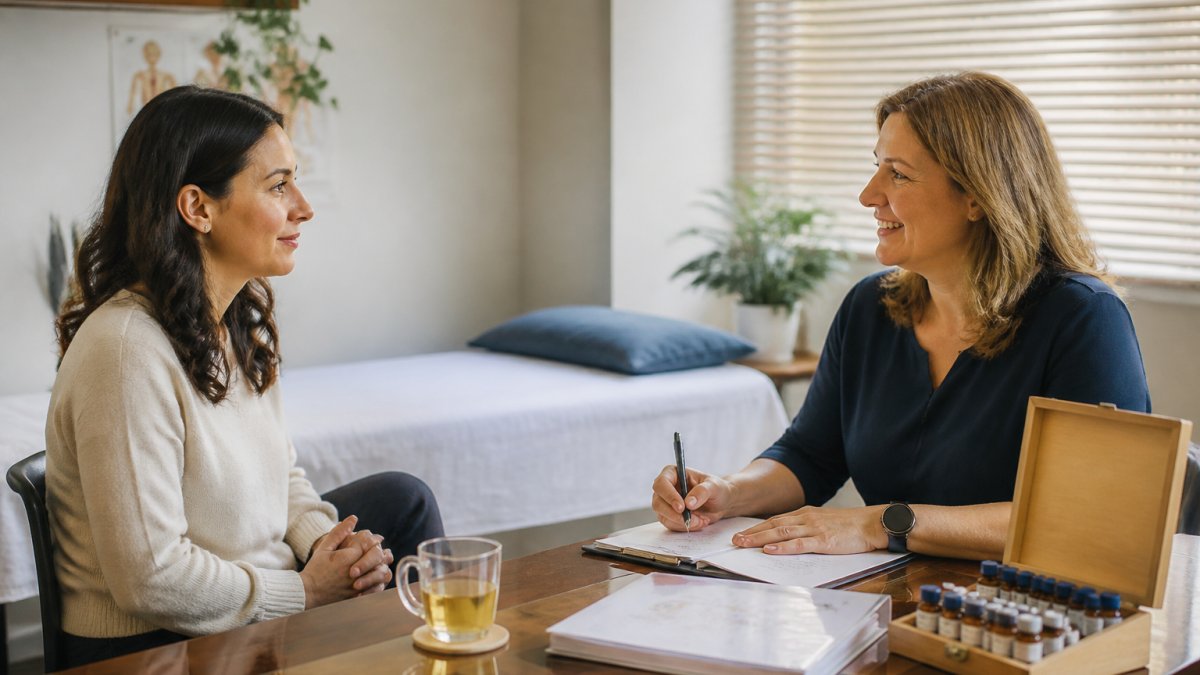
That distinction matters more than any single therapy. At Acupuncture, we see women who arrive frustrated after months of conflicting advice, unsure whether to pursue acupuncture, supplements, or a full clinical workup first.
How It Differs From Seeing a Fertility Specialist Alone
A fertility specialist investigates and treats the medical cause of infertility: ovulation disorders, tubal factors, endometriosis, sperm health, hormone imbalances. That work is essential and cannot be substituted.
Integrative care adds a second layer. The Royal Australian and New Zealand College of Obstetricians and Gynaecologists guidance on fertility care frames fertility investigation as a medical process; complementary therapies sit around it, not inside it.
What most guides miss is that sequencing matters. Starting acupuncture three months before an IVF cycle is a different decision from starting it the week of transfer.
Acupuncture for Fertility Success Rates: What the Evidence Shows
Acupuncture is a traditional Chinese medicine technique in which fine needles are inserted at specific points to influence blood flow, nerve signalling and muscular tension. Its role in fertility is supportive, not curative.
The evidence is mixed and often overstated online. In practice, the strongest case for acupuncture is in reducing treatment-related stress and improving how women feel during an IVF cycle, which many patients value regardless of the outcome.
Do not delay a fertility investigation to “try acupuncture first.” If you have been trying to conceive for 12 months, or six months if you are over 35, book the medical workup in parallel. Delaying diagnosis is the one mistake that genuinely costs time.
During IVF Cycles vs Natural Conception
During an IVF cycle, acupuncture is typically used before and after embryo transfer to support relaxation and blood flow. For natural conception, sessions usually follow the menstrual cycle, with treatment timed around ovulation.
The goals differ. IVF support is about tolerating a demanding process. Natural conception support is about cycle regularity, stress and general preconception health.
Herbal Medicine for Preconception Care: Benefits, Safety and Timing
Herbal medicine for preconception care uses plant-based formulas to support cycle regularity, digestion, sleep and stress. Chinese herbal medicine is the most common form used alongside acupuncture in this setting.
The honest framing is this: herbs are pharmacologically active, evidence varies enormously by herb and by outcome, and safety depends almost entirely on how well your practitioner coordinates with your fertility clinic.
What the Evidence Actually Supports
It helps to separate three questions that get blurred together:
- Cycle regularity and ovulation, Some traditional formulas are used to support regular cycles, but trial quality is mixed and effects on live birth are not established.
- Stress and sleep, Herbal support for relaxation and sleep is plausible and commonly reported by patients, though this is supportive care, not fertility treatment.
- Pregnancy and live birth outcomes, This is where evidence is weakest. No herbal formula should be presented as improving the chance of pregnancy or live birth.
A useful rule: if a source claims a specific herb “boosts fertility” or “cures” a diagnosed condition, treat that claim with suspicion. Reputable practitioners describe herbs as supportive and describe outcomes honestly.
Safety, Interactions and Timing
This is where coordination matters most. Several categories of herbs are commonly paused or avoided around fertility treatment and early pregnancy:
- Herbs with hormonal or uterine activity, which may interfere with a stimulated cycle
- Herbs that affect blood clotting, which is relevant around egg collection and transfer
- Herbs that interact with medications used during stimulation or luteal support
Because interaction profiles with fertility drugs are often not well established, most practitioners pause certain herbs several weeks before a stimulated cycle begins rather than mid-cycle. Your herbal practitioner and your fertility clinic should agree on a stop date in advance. Coordinating these timelines ensures that your body remains prepared for treatment, a principle that remains equally vital when navigating the diverse fertility options available to same-sex couples.
Never start, stop or change a herbal formula on your own mid-cycle. If you are already taking herbs and you are about to begin stimulation, tell your clinic at your next appointment, not after transfer.
How to Coordinate Herbal Care With Your Clinic
A simple process prevents most problems:
- List everything. Write down every herb, supplement, dose and practitioner, including anything bought over the counter.
- Share it early. Give the list to your fertility specialist at your first appointment, not the week of transfer.
- Ask one direct question. “Is there anything on this list you want me to stop, and by when?”
- Agree a stop date. If herbs are to be paused, both practitioners should confirm the same date.
- Review at each stage. What is appropriate before stimulation may not be appropriate during it.
Choosing a Practitioner
In this country, Chinese medicine practitioners are registered with the Australian Health Practitioner Regulation Agency (AHPRA), which sets national standards for training and safety. Registration is the baseline; ask also about the practitioner’s experience working alongside fertility clinics and whether their dispensary follows a verified quality standard.
A practitioner who is comfortable saying “this herb is not appropriate during your cycle” is more useful to you than one who promises outcomes. (Source: Australian guidelines on preconception health)
An Integrative Approach to IVF Support: Coordinating Care With Your Clinic
An integrative approach to IVF support works only when your fertility clinic knows what you are doing. That means telling your specialist about acupuncture, herbs and supplements at your first appointment, not after transfer.
Ask your clinic what they are comfortable with. Some welcome complementary care; others want a clear list before agreeing. Either way, transparency protects you. Bring a written summary of every therapy, dose and practitioner.
Ask your fertility specialist one direct question: “Is there anything on this list you want me to stop?” It takes two minutes and prevents most coordination problems.
Supplements, Nutrition and Lifestyle: What Matters Most
Nutrition and lifestyle changes are the least controversial part of integrative fertility support for women, and often the most effective starting point. Preconception guidance consistently emphasises folate, a varied diet, healthy weight, limited alcohol and not smoking.
What most guides miss is that supplements are not one category. They sit on a spectrum from established preconception guidance to limited or conflicting evidence, and the safety and interaction picture differs at each level.
Grading Supplements by Evidence and Role
| Supplement | Typical role | Evidence picture | Practical note |
|---|---|---|---|
| Folate | Preconception neural development | Established preconception guidance | Start before conception; discuss dose with your GP |
| Vitamin D | Correcting deficiency | Well established for deficiency; not a fertility treatment | Check levels with your GP rather than guessing |
| Iodine | Thyroid and preconception health | Established in preconception guidance | Often included in pregnancy supplements |
| CoQ10 | Egg health discussions | Limited and mixed; not established for live birth | Discuss with your specialist before starting |
| Omega-3 fatty acids | General and reproductive health | Mixed; not established for fertility outcomes | Food sources first; discuss supplements |
| Inositol | Cycle regularity in some situations | Some supportive evidence in specific contexts | Best discussed with your GP or specialist |
Two things follow from this table. First, the top rows are the ones worth getting right early. Second, the bottom rows are the ones where self-prescribing is most common and least justified.
Safety and Interactions
Supplements are not automatically harmless because they are sold without prescription. Points worth knowing:
- Dose matters. More is not better, and some nutrients are harmful in excess.
- Interactions occur. Some supplements interact with medications used during fertility treatment or with thyroid medication.
- Timing matters. What is appropriate during preconception may not be appropriate during a stimulated cycle.
If you are taking anything beyond a standard preconception supplement, tell your fertility specialist and your GP. Bring the actual packaging or a written list.
Nutrition and Lifestyle: The Modifiable Basics
- Diet, a varied pattern with adequate protein, vegetables, whole grains and healthy fats supports general preconception health.
- Weight, both significantly underweight and overweight status can affect ovulation and treatment response; discuss with your GP rather than crash dieting.
- Alcohol, reducing intake is standard preconception advice.
A Simple Preconception Checklist
- Start folate before conception
- Ask your GP to check vitamin D and thyroid function
- Review every supplement and herb with your GP or specialist
Keep one page listing every supplement, herb, dose and start date. Take it to every appointment. It takes minutes to maintain and prevents most coordination problems.
This is also a shared project. Partner factors, sperm health, alcohol, smoking, weight and heat exposure, matter to outcomes, and preconception habits are more likely to stick when both partners make them together.
When to Seek a Fertility Evaluation (and What to Track)
Seek a fertility evaluation after 12 months of trying if you are under 35, or after six months if you are 35 or older. Seek it sooner if your cycles are irregular, painful, or absent.
Track these basics before your appointment:
- Cycle length and ovulation signs
- Any pain, bleeding patterns or medication use
- Sleep, stress and alcohol intake
This information makes your first specialist appointment far more productive. It also gives your practitioner a clearer picture of where complementary support can help.
Choosing a Qualified Practitioner and Building Your Care Plan
Choose a practitioner registered with the Australian Health Practitioner Regulation Agency (AHPRA) and, where relevant, a professional association for Chinese medicine.
A practical care plan usually includes:
- A medical diagnosis from your fertility specialist
- Acupuncture timed to your cycle or treatment
- Herbal medicine reviewed against your protocol
At Acupuncture, our practitioners hold AHPRA registration as Doctors of Chinese Medicine, and our dispensary is PICS GMP-certified, which means herbal products are prepared to a verified quality standard.
Integrative fertility support works best as a coordinated layer around real medical care, not a substitute for it.
Frequently Asked Questions
How does acupuncture support fertility outcomes?
Acupuncture is used to support blood flow to the reproductive organs, help regulate the menstrual cycle and reduce the stress response that can affect ovulation. Some studies suggest it may improve outcomes when used alongside IVF, particularly when sessions are timed around embryo transfer, but results across trials are mixed and it should not replace medical fertility treatment. A qualified practitioner will tailor sessions to your cycle stage and diagnosis.
What role does herbal medicine play in preconception care?
Herbal medicine for preconception care typically focuses on supporting regular ovulation, hormone balance and general wellbeing in the months before conception. Formulas are individualised, and some herbs need to be stopped before an IVF cycle or embryo transfer because their interaction with fertility drugs is not well understood. Always tell your fertility specialist and your herbal practitioner about every supplement and medicine you take.
Is integrative fertility support safe to use alongside IVF?
Many complementary therapies can be used alongside IVF when they are coordinated with your fertility clinic. The main risks come from unregulated products, herbs that interact with fertility medications, and delaying or replacing evidence-based treatment. Ask your specialist before starting anything new, use only practitioner-prescribed products from a certified dispensary, and keep a single list of everything you are taking.
What should I look for in a qualified fertility acupuncturist?
Look for registration with the Chinese Medicine Board of Australia through AHPRA, which is required to practise acupuncture in this country. Ask about experience with fertility and IVF patients, whether they hold professional indemnity insurance, and whether they will communicate with your fertility clinic. A practitioner who is comfortable coordinating with your medical team, and who does not promise a pregnancy, is usually a better fit than one who does.
How does stress management impact reproductive health?
High stress does not cause infertility on its own, but it can disrupt ovulation, affect sleep and make treatment cycles harder to manage emotionally. Techniques such as acupuncture, meditation, yoga and structured counselling are used to reduce the stress load during preconception and IVF. These approaches work best as part of a broader plan that includes medical care, realistic expectations and support from your partner or a counsellor.
When should I seek a fertility evaluation?
See a GP or fertility specialist if you have been trying to conceive for 12 months without success, or after six months if you are over 35. Seek help sooner if your cycles are very irregular, you have a known condition such as PCOS or endometriosis, or you have had recurrent miscarriages. Integrative support works best alongside this assessment, not as a substitute for it.
Can I use herbal supplements and acupuncture at the same time as fertility medication?
Often yes, but only with coordination. Some herbs affect how the body processes fertility drugs, and a few should be paused in the week before an embryo transfer. Bring your full list of supplements, herbs and medications to both your fertility specialist and your Chinese medicine practitioner, and ask them to agree on what is safe to continue during stimulation and after transfer.


