
Last Updated: November 1, 2026
Quick Summary
Massage can help with stress relief by encouraging the body to shift from its alert state toward a calmer one. Gentle, rhythmic pressure may support the parasympathetic “rest and digest” response, and many people report feeling calmer after a session. Massage for stress works best as one practical tool for settling the body, not a cure.
- Stress keeps the sympathetic “fight or flight” branch switched on for too long.
- Slow, steady strokes may help the parasympathetic “rest and digest” branch take over.
- Stress and muscle tension feed each other, often showing up in the neck, shoulders and lower back.
- Many people find the calm lasts hours, and some notice it for a day or two.
- Tell your practitioner about medical conditions and any sore spots before the session starts.
Table of Contents
- How Massage Affects the Nervous System
- The Link Between Muscle Tension and Stress
- Massage Techniques for Relaxation and Stress Relief
- Best Massage for Stress and Anxiety
- How Long Does the Relaxation from Massage Last?
- Self-Massage and Other Practices to Combine with Professional Sessions
- Booking Your First Session: What to Discuss With Your Practitioner
- Frequently Asked Questions
How Massage Affects the Nervous System
Can massage help with stress relief? Many people report feeling calmer after a session, and one explanation starts with the nervous system. Gentle, rhythmic pressure on the skin and muscles may encourage the body to shift out of its alert state and into a calmer one.
Stress keeps the body in a state of readiness. Heart rate rises, breathing quickens and muscles tighten. Slow, steady massage strokes are often described as helping the body move toward the parasympathetic “rest and digest” response.
The two branches of the autonomic nervous system
The autonomic nervous system has two main branches that work in opposition:
- Sympathetic nervous system: the “fight or flight” branch. It raises heart rate, sharpens attention and tenses muscles so you can respond to a threat.
- Parasympathetic nervous system: the “rest and digest” branch. It slows heart rate, deepens breathing and supports digestion and recovery.
Under ongoing stress, the sympathetic branch stays switched on for too long. Massage is thought to help by giving the parasympathetic branch a chance to take over. The slow, predictable rhythm of strokes on the skin is a form of gentle sensory input that many practitioners describe as signalling safety to the body.
What the research suggests
Some published studies have examined short-term effects of a single massage session, with results that vary between studies.
Massage is best understood as a way to support calm rather than a treatment for a medical condition. Individual responses vary widely, and some people notice very little change from a single session.
Many people report feeling calmer and less tense after a session, though the effects vary from person to person. Think of massage as one practical tool for settling the body, not a cure for stress.
The article compares the two branches of the autonomic nervous system that massage is thought to influence.
| Branch | Nickname | Main effect |
|---|---|---|
| Sympathetic | Fight or flight | Raises heart rate, sharpens attention, tenses muscles |
| Parasympathetic | Rest and digest | Slows heart rate, deepens breathing, supports recovery |
The Link Between Muscle Tension and Stress
Stress and muscle tension feed each other. When you feel pressure, your shoulders rise, your jaw clenches and your neck stiffens. That tension then sends signals back that the body is not yet safe, and the cycle continues. Interrupting this feedback loop requires physical intervention to signal safety to the nervous system, a principle that also informs the use of acupuncture for stress to restore balance throughout the body.
Most people notice this first in the neck, shoulders and lower back. A long day at a desk or a tense week can leave these areas tight and sore.
- Shoulders that stay raised for hours
- Jaw clenching during sleep or focus
- Tight neck muscles that cause tension headaches
- Lower back stiffness from sitting still
Easing that tension can make it easier to notice when your body is winding down. It is a practical starting point, especially for people whose stress shows up physically.
Massage Techniques for Relaxation and Stress Relief
Different techniques suit different goals. You can compare each style on our massage service page to see which one fits what you want from a session. A gentle, flowing style is often the best choice when the aim is simply to relax. Deeper work can help when specific muscle knots are causing discomfort.
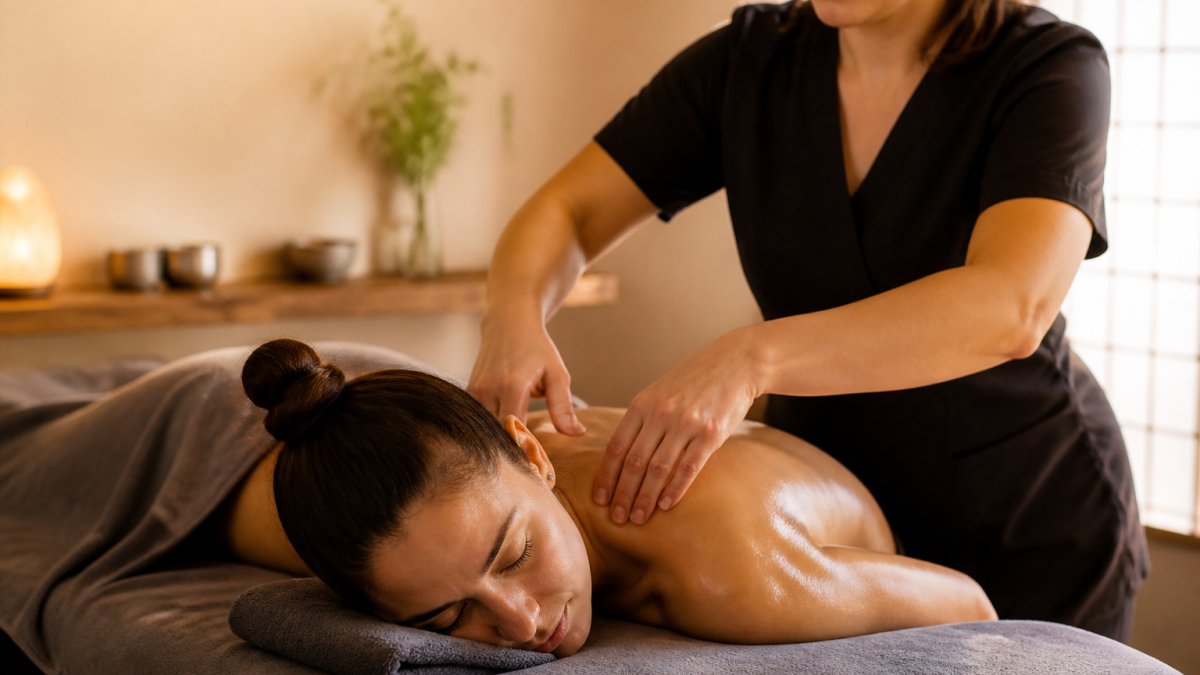
Here are the most common options:
- Swedish massage: Long, gliding strokes that promote overall relaxation
- Remedial massage: Targets areas of muscle tightness and tension
- Trigger point therapy: Applies steady pressure to tight spots in the muscle
- Myofascial release: Slow, sustained pressure to ease tight connective tissue
Tell your practitioner what you want from the session. If you want to unwind, say so. If you have a sore spot, point it out so they can focus there.
Best Massage for Stress and Anxiety
There is no single “best” massage for everyone. For stress and anxiety, many people prefer a slower pace with lighter pressure. This style is often easier to sit through when your mind is busy.
Some people with anxiety find deep pressure reassuring, while others find it uncomfortable. Pay attention to how your body responds and speak up during the session. (Source: the impact of stress on physical health)
Watch out: Avoid deep pressure on any area that is swollen, bruised, or painful, and tell your practitioner about any medical conditions before the session starts.
Massage is best seen as one part of a wider approach to stress, not a replacement for professional health care. If stress or anxiety is affecting your daily life, speak with a qualified health professional.
How Long Does the Relaxation from Massage Last?
The calm feeling after a massage often lasts for hours, and some people notice it for a day or two. You can read a stress relief recovery timeline that walks through how the effects typically change over the following days. How long it lasts depends on your stress levels, your routine and how often you book sessions.
Some people find that regular sessions help them feel calmer over time.
Why the effect fades, and what you can do about it
Feelings of relaxation after a session often fade as daily demands return. That is normal, and it is not a sign the massage “didn’t work”.
Some people find a few simple habits help them keep the feeling of calm after a session:
- Protect the first hour. Avoid jumping straight into email or a difficult conversation. If you can, take a short walk or sit quietly.
- Keep the warmth. A warm shower or a heat pack on the neck and shoulders can help muscles stay relaxed.
- Hydrate and eat lightly. Some people feel slightly light-headed after deep work; water and a light snack help.
- Repeat one self-massage move from the section below before bed to reinforce the calm.
- Book the next session before you leave. Booking in advance removes the decision friction that often stops people from returning.
Plan your session for a time when you can rest afterward if you can.
How often should you book?
There is no single correct frequency. Some people book:
- Weekly or fortnightly during a particularly stressful period
- Monthly as a maintenance rhythm once stress is more manageable
- As needed around specific events such as a demanding work deadline or a period of poor sleep
The right cadence is the one you can sustain.
Self-Massage and Other Practices to Combine with Professional Sessions
Professional massage works well alongside simple habits you can do at home. Self-massage is a practical way to keep tension from building between appointments.
Try these easy practices:
- Roll your shoulders slowly for one minute at your desk
- Use your fingertips to massage your temples and jaw
- Apply a warm towel to a tight neck or lower back
- Take five slow, deep breaths before bed
- Stretch your chest and hips after long periods of sitting
Some people find these habits sit well alongside professional sessions.
Booking Your First Session: What to Discuss With Your Practitioner
Before your first session, tell your practitioner about your stress, sleep, and any pain or health concerns. Be clear about your goals, whether that is relaxation, easing tension or supporting recovery.
Mention any medical conditions, injuries, medications or pregnancy. This helps your practitioner choose safe techniques and pressure.
Ask questions if anything is unclear. A good session should feel comfortable, and you can always ask for lighter or firmer pressure at any point. If you are ready to try massage for stress, you can book a massage session to get started.
If you are not sure which style fits your needs, you can learn more about massage therapies and what each one offers, or read more about remedial massage benefits and what to expect.
Frequently Asked Questions
Can massage help with stress relief?
Massage may help with the physical side of stress, particularly the muscle tension that often builds up alongside it. Many people report feeling calmer and more relaxed after a session. Massage is a supportive practice rather than a treatment for stress-related conditions, so it works best alongside other approaches. If stress is persistent or affecting your daily life, speak with a qualified health professional about your options.
What type of massage is best for stress and anxiety relief?
Gentler approaches such as Swedish massage are often chosen by people seeking relaxation, because they use long strokes and light to moderate pressure. Remedial massage may suit people whose stress shows up as tight shoulders, neck or back. The best choice depends on your comfort, your preferences and any health conditions you have. A conversation with your practitioner before the session helps them tailor the pressure and technique to you.
How long does the relaxation from a massage last?
The feeling of relaxation after a massage varies widely between people. Factors such as how much tension you carry, how regularly you have sessions and what your daily stressors are all play a role. Some people find that regular sessions help them feel calmer over time, rather than relying on a single appointment. Keeping a simple record of how you feel after each session can help you work out what suits you.
Is remedial massage relaxing?
Remedial massage focuses on specific areas of tension and muscle discomfort, so it can feel more intense than a general relaxation massage. Tell your practitioner about your comfort level so they can adjust pressure. If you have a health condition, check with your doctor before booking.
Our team at Acupuncture can talk through your stress, tension and wellbeing goals and suggest a plan that suits you.


