
Table of Contents
- What Is Remedial Massage and How Does It Help Back Pain?
- Common Causes of Back Pain a Remedial Therapist Assesses
- What to Expect During a Remedial Massage Session
- Deep Tissue vs Remedial Massage: What’s the Difference?
- How Often Should You Get Remedial Massage for Back Pain?
- Self-Massage Techniques and Stretches to Support Recovery at Home
- Combining Remedial Massage With Other Therapies for Lasting Relief
- Frequently Asked Questions
Last Updated: September 30, 2026
What Is Remedial Massage and How Does It Help Back Pain?
Remedial massage is a targeted form of therapeutic massage that treats injured or tight muscles, aiming to restore normal movement and reduce pain. At Acupuncture, our practitioners use remedial massage for back pain as part of a broader plan that looks at why your back hurts, not just where it hurts. (Source: growing body of research)
Back pain is one of the most common reasons people book a massage. It can come from long hours at a desk, an old sports injury, or simply the way you hold yourself day to day.
How Remedial Massage Works on Muscles and Joints
Remedial massage works on the body in a few practical ways. It eases muscle tension, which helps reduce muscle spasms and trigger points. It also supports circulatory improvement, so fresh blood and oxygen reach the tissue that needs to heal.
Common Causes of Back Pain a Remedial Therapist Assesses
A remedial therapist assesses the causes behind your back pain, not just the symptoms. This includes muscle tension, postural alignment, soft tissue injury and nerve impingement. Each one needs a slightly different approach.
Common causes include:
- Long periods sitting with poor posture
- Muscle knots and chronic tension in the shoulders and lower back
- Old injuries that never fully healed
- Weak core or glute muscles
- Stress, which tightens muscles and lowers your pain threshold
- Sudden acute injury from lifting or sport
Desk Work, Posture and Muscle Tension
Desk work is one of the biggest drivers of back and neck pain. Sitting for hours shortens the hip flexors, weakens the glutes, and loads the lower back. Over time, muscle tension builds and becomes chronic pain.
What to Expect During a Remedial Massage Session
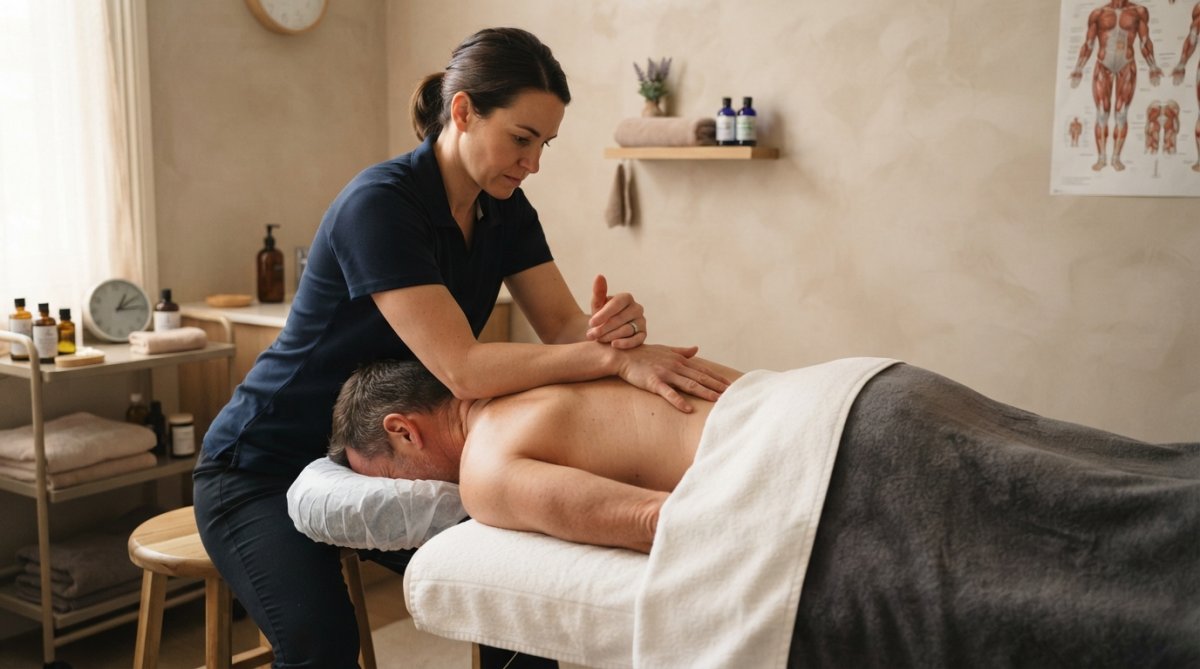
A remedial massage session starts with a short clinical assessment. The therapist asks about your pain, your history and your daily habits. Then they check your posture and movement before any hands-on work begins.
Deep Tissue vs Remedial Massage: What’s the Difference?
Deep tissue and remedial massage overlap, but they aren’t the same thing. Deep tissue massage focuses on the deeper layers of muscle using slow, firm strokes. Remedial massage is broader: it includes assessment, treatment and a plan for your specific problem.
| Feature | Deep Tissue Massage | Remedial Massage |
|---|---|---|
| Main focus | Deep muscle layers | Whole-body assessment and treatment |
| Assessment | Limited | Detailed clinical assessment |
| Goal | Release deep tension | Restore function and reduce pain |
| Best for | General tightness | Specific injuries and chronic pain |
How Often Should You Get Remedial Massage for Back Pain?
How often you should get remedial massage for back pain depends on what’s driving the pain, how long you’ve had it, and how your body responds between sessions. A generic “once a week” answer isn’t useful, because a recent muscle strain and long-standing sciatica follow very different recovery paths.
Typical recovery timelines by type of back pain
These are common patterns, not guarantees. Your own timeline will depend on your history, general health and how consistently you do your home care.
- Acute muscle strain (no nerve involvement): often settles over 2-6 weeks. Weekly sessions for the first 2-3 weeks are common, then spacing out to fortnightly as movement returns.
- Long-standing postural or desk-related pain: usually responds more slowly because the cause is ongoing. Expect weekly or fortnightly sessions for 4-8 weeks, with ergonomic and strength work running alongside.
- Sciatica or nerve-related pain: progress is often measured in months rather than weeks. Sessions may be weekly at first, then fortnightly, but the massage is supporting a plan that should also involve a physiotherapist or GP, especially if you have numbness, weakness or pain radiating below the knee.
- Maintenance after recovery: every 3-6 weeks is a common rhythm for people whose pain is tied to their work or training load.
How to tell if the plan is working
A useful rule is to judge progress by function, not by how you feel an hour after the session. Ask yourself:
- Is the relief lasting longer each time?
- Can you sit, stand or walk for longer before the pain returns?
- Are you needing fewer pain-relief measures?
Book your next session based on how long the previous one held, not on a fixed calendar. If relief lasted five days, a seven-day gap is reasonable. If it lasted two days, weekly treatment is unlikely to be enough on its own.
::: Bridging these gaps requires strengthening the supporting musculature through functional fitness exercises to ensure that the relief gained during your massage lasts well beyond the next appointment.
When to pause and seek other advice
Stop and seek medical assessment if you have severe pain after a fall or accident, numbness around the groin or inner thighs, loss of bladder or bowel control, unexplained weight loss, or pain that is steadily worsening rather than fluctuating. These are red flags that need a doctor, not a massage table.
Self-Massage Techniques and Stretches to Support Recovery at Home
Home care between sessions is where a lot of lasting relief is won or lost. Most guides list a few stretches and stop there. What follows is more specific: what to do, how long to hold it, and, just as importantly, when to leave it alone.
Self-massage you can do safely
- Tennis or massage ball release (glutes and upper back): lie on the ball with it placed in the fleshy part of the glute or beside the shoulder blade, never directly on the spine or lower ribs. Apply steady pressure for 30-60 seconds per spot, breathing out as you settle in. This helps ease the trigger points that commonly refer pain into the lower back.
- Thumb or knuckle work along the upper back: use slow, small circles on the muscles either side of the spine, not on the spine itself. One to two minutes per side is plenty.
- Foam roller for the mid-back: lie with the roller across the upper back, support your head, and gently extend over it. This can improve thoracic mobility, which often takes load off the lower back.
Stretches with dosage
- Cat-cow: move slowly through the spine on all fours, 8-10 repetitions, twice a day. Good for general stiffness and for keeping the spine moving.
- Child’s pose: hold for 30-45 seconds, breathing steadily. Lengthens the lower back without loading it.
- Figure-four stretch: hold 30 seconds per side. Targets the glutes and piriformis, which frequently refer pain into the back and buttock.
- Knee-to-chest: 20-30 seconds per side, done gently. Useful for lower back tightness, but skip it if it increases leg symptoms.
- Hip flexor stretch (half-kneeling): 30 seconds per side. Desk work shortens the hip flexors, which tilts the pelvis and loads the lower back.
Movement beats stretching alone
A short daily walk, even 10-15 minutes, often does more for back pain than any single stretch, because it keeps the spine moving, pumps circulation and reduces stiffness. Build it into your day rather than treating it as a workout.
Skip any stretch or self-massage technique that makes your pain sharper, sends symptoms further down your leg, or leaves you worse the next day. Note it and raise it at your next session, it’s useful information for your therapist, not a failure on your part.
Making it stick
Two or three short sessions a day beat one long one. Tie the routine to something you already do, after your morning coffee, before your lunch break, or when you get home from work. Consistency over a few weeks is what changes how your back feels between appointments, and it gives your therapist a clearer picture of what’s working.
Combining Remedial Massage With Other Therapies for Lasting Relief
Remedial massage works best as part of a wider plan. Combining it with other therapies often gives longer-lasting relief than massage alone. This is the integration angle that many people miss.
Depending on your situation, useful additions include:
- Physiotherapy for strength and movement retraining
- Acupuncture for pain management and stress relief
- Herbal medicine for inflammation and sleep support
- Gentle exercise or clinical Pilates for core stability
Frequently Asked Questions
What type of massage is best for severe back pain?
Remedial massage is often recommended for back pain because it includes a clinical assessment before treatment and uses targeted pressure on specific muscle groups. A therapist will assess your posture, range of motion and areas of muscle tension to decide which techniques suit you. Severe or worsening pain should be checked by a doctor first, since massage is not suitable for every cause of back pain.
How is remedial massage different from a relaxation massage?
Remedial massage is treatment-focused rather than purely relaxing. The therapist assesses your condition, sets therapeutic goals and works on specific areas of muscle tension, trigger points or restricted movement. Relaxation massage uses lighter, flowing strokes across the whole body. Remedial sessions may involve firmer targeted pressure, and some tenderness during treatment is possible, though your therapist will adjust pressure to your pain threshold.
How often should you get remedial massage for back pain?
Frequency depends on whether your pain is recent or ongoing. For acute back pain, some people book weekly sessions for a short period, then space them out as symptoms ease. For chronic pain, fortnightly or monthly maintenance is common. Your therapist will suggest a schedule after assessing your back and reviewing how you respond to the first few treatments.
Can remedial massage help with chronic lower back pain from desk work?
Remedial massage can form part of a chronic pain management plan for desk-related lower back pain. Prolonged sitting contributes to muscle tension and reduced mobility, and hands-on treatment aims to ease soft tissue tightness and support range of motion. Results vary between individuals. Combining massage with ergonomic adjustments, regular movement breaks and any exercises your practitioner recommends tends to be more useful than massage alone.
Back pain rarely resolves on its own when the underlying causes stay untreated. At Acupuncture, our team offers remedial massage alongside acupuncture and herbal medicine, backed by more than 35 years of clinical experience and precise, low-pain techniques. We build personalised plans that target the root cause, not just the sore spot. Book now with Acupuncture and take the first step toward moving freely again.


